 comparison
Civil vs Religious Wedding Ceremony: Key Differences
Table of Contents
- Civil vs Religious Wedding Ceremony: What Sets Them Apart
- Civil Wedding Ceremony Requirements and Legal Recognition
- Religious Wedding Ceremony: Authority, Traditions, and Legal Status
- Civil Wedding Ceremony Script: Structure and Personalization
- Religious Wedding Ceremony Script: Vows, Readings, and Rituals
- Civil Wedding Ceremony Length and Timeline
- Can You Have Both a Civil and Religious Ceremony?
- Choosing Between Civil and Religious: What Matters Most
- Frequently Asked Questions
Last Updated: October 8, 2026
Civil vs Religious Wedding Ceremony: What Sets Them Apart
When you're planning your wedding, one of the first decisions you'll face is choosing between a civil vs religious wedding ceremony, or having both. These two approaches differ fundamentally in their legal standing, who can officiate, what traditions are included, and how they're structured. Understanding the distinctions between civil and religious wedding ceremonies helps you make an informed choice that aligns with your values, beliefs, and legal requirements.
At Mountain Preacher, we work with couples every day who are navigating these exact questions. Some couples arrive certain they want a faith-based celebration; others prefer a secular, personalized approach. Many discover they want elements of both. The good news: you don't have to choose between legal validity and meaningful tradition. Let's break down what makes each approach unique.
Civil Wedding Ceremony Requirements and Legal Recognition
A civil wedding ceremony is a legally binding marriage performed by a government-authorized official. It creates a legally recognized marriage that's recorded with the state. This is the only type of ceremony that automatically satisfies legal marriage requirements without additional paperwork.
Civil ceremonies are straightforward in their legal framework. You obtain a marriage license from your local county clerk, appear before an authorized officiant, exchange vows, and sign the license in front of witnesses. Once signed and filed, your marriage is official. The ceremony itself can be as simple or as personalized as you want, there's no mandated script or religious content required.
Who Can Officiate a Civil Ceremony
Civil wedding ceremonies must be conducted by someone legally authorized to solemnize marriages in your state. In most states, this includes:
- Justices of the peace
- Judges and magistrates
- Certain county or municipal officials
- Some states allow notary publics to officiate
- A small number of states permit ordained ministers to perform civil ceremonies (though they're acting in a civil capacity, not a religious one)
The key requirement is that the officiant must be registered or commissioned with the state. They don't need any religious credentials, only legal authorization. This is why civil ceremonies offer flexibility: the officiant can be anyone who meets your state's requirements, regardless of their personal beliefs.
Marriage License and Registration
Every legal marriage in the United States requires a marriage license. You'll apply for this through your county clerk's office, typically 1-3 days before your ceremony (though timing varies by state). You'll need:
- Valid photo identification
- Proof of age
- Social Security numbers
- Information about any previous marriages
Once your civil ceremony is complete and the license is signed by both spouses and the officiant, it's filed with the county. This creates the legal record of your marriage. Without this step, your ceremony, even if performed by an authorized official, doesn't create a legal marriage.
Religious Wedding Ceremony: Authority, Traditions, and Legal Status
A religious wedding ceremony is conducted according to the traditions and requirements of a faith community. It's performed by a religious authority, a priest, minister, rabbi, imam, or other clergy member, and incorporates prayers, readings, rituals, and vows specific to that faith.
Here's a critical distinction: a religious ceremony alone does not automatically create a legal marriage. Many couples don't realize this. A beautiful, meaningful religious ceremony performed by clergy is spiritually and culturally significant, but it doesn't satisfy legal marriage requirements unless the officiant is also legally authorized to solemnize marriages in your state.
Religious Authority and Officiant Requirements
Religious ceremonies require an officiant who holds authority within that faith tradition. This might be:
- A priest, minister, or pastor in Christian denominations
- A rabbi in Jewish tradition
- An imam in Islamic practice
- A monk or spiritual leader in Buddhist or Hindu traditions
- Other faith-specific clergy or authorized persons
Religious authorities don't need state authorization to perform their faith's ceremonies. A church can marry you according to its traditions without involving civil law. However, if you want that marriage to be legally recognized, the religious officiant must also be registered with the state as someone authorized to solemnize marriages, or you must obtain a separate civil marriage license and have a civil official sign it.
Ceremony Traditions and Rituals
Religious ceremonies follow the customs and requirements of the faith. These might include:
- Specific vows or marriage vows prescribed by the religion
- Prayer and spiritual readings
- Symbolic rituals (exchanging rings, breaking glass, lighting candles, tying knots)
- Witness requirements (some faiths require specific numbers or types of witnesses)
- Dress codes or other expectations
- Restrictions on who can marry whom (some faiths have rules about interfaith marriages or prior divorces)
These traditions give the ceremony its spiritual meaning and cultural significance. They connect the couple to their faith community and heritage. But they're separate from the legal requirements of marriage.
Civil Wedding Ceremony Script: Structure and Personalization
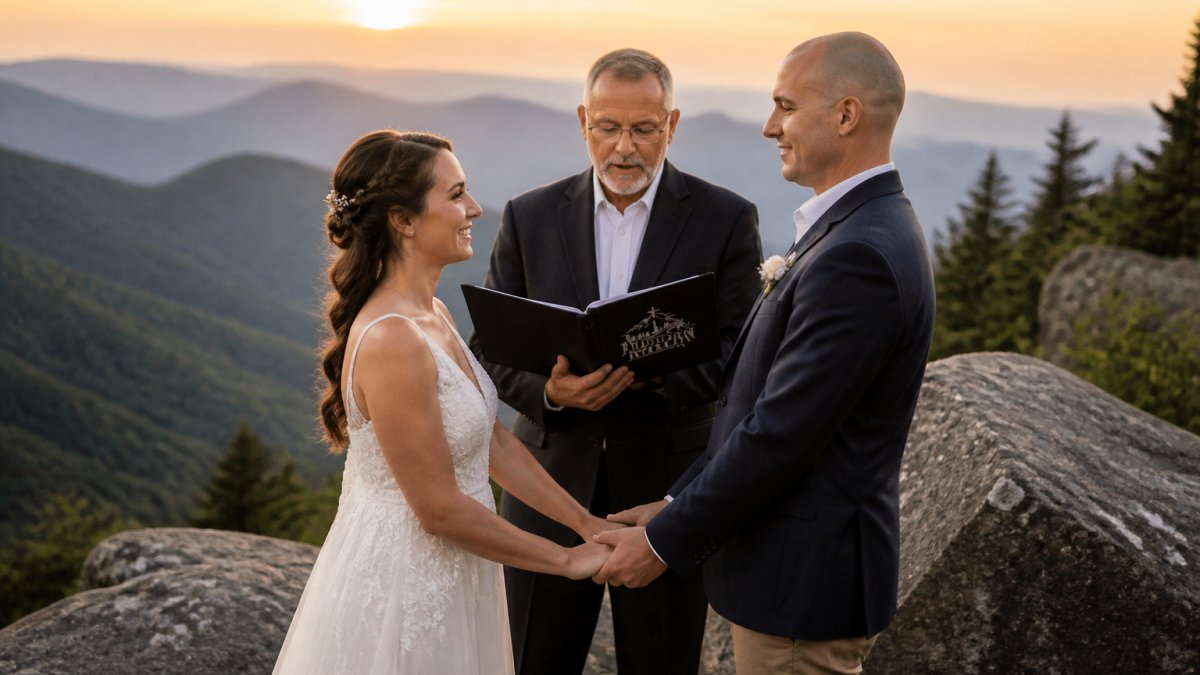
Civil ceremonies offer complete freedom in structure and content. There's no required script. An officiant might follow a traditional format, or you might create something entirely personalized.
A typical civil ceremony structure includes:
- Opening remarks (welcome, context about the couple)
- Exchange of vows (either traditional or personalized)
- Exchange of rings (or other symbolic gestures)
- Declaration of marriage (the moment the officiant pronounces you married)
- Signing of the marriage license
- Closing remarks or pronouncement
The beauty of a civil ceremony is that you control the content. You can include readings that matter to you, music that resonates with your relationship, and vows that reflect your values. Many couples add personal touches, inside jokes, shared memories, promises specific to their relationship. Because there's no religious requirement, you're free to design the ceremony around what's meaningful to you both.
Religious Wedding Ceremony Script: Vows, Readings, and Rituals
Religious ceremonies follow established traditions within the faith. The script and structure are often determined by the religion itself, though many faiths now allow personalization within their framework.
A Christian wedding ceremony might include Scripture readings, traditional or personalized vows, prayer, and the exchange of rings. A Jewish ceremony includes the ketubah (marriage contract), blessings, the exchange of rings, and the breaking of glass. Islamic ceremonies involve the nikah (marriage contract) and specific vows. Each tradition carries centuries of meaning.
Many couples appreciate this structure because it connects them to something larger than themselves. The familiar words and rituals create continuity with their faith community and ancestors.
The officiant (clergy member) guides the ceremony according to their faith's requirements. They may have restrictions on what can be included, who can participate, or what the couple must agree to. Some faiths require pre-marital counseling or have rules about mixed-faith marriages.
Civil Wedding Ceremony Length and Timeline
Civil ceremonies are typically short, depending on personalization.
The actual ceremony is only part of the timeline. You'll need to account for:
- Obtaining the marriage license (1-3 days before, depending on state)
- Scheduling with the officiant
- Gathering witnesses
- Signing and filing the license (happens immediately after the ceremony)
Because civil ceremonies are simple and don't require religious preparation or community participation, they're often faster to organize. This is why they're popular for elopements and last-minute weddings. Mountain Preacher can guide you through Tennessee marriage license requirements and coordinate timing so your ceremony happens smoothly, even with minimal advance notice.
Religious ceremonies often take longer, 30 minutes to over an hour, because they include more ritual elements and may involve the faith community. Some faiths also require preparation time: pre-marital counseling, faith instruction, or community involvement.
Can You Have Both a Civil and Religious Ceremony?
Yes, absolutely. Many couples choose to have both a civil ceremony and a religious ceremony. This approach gives you legal recognition and spiritual meaning.
Here's how it works in practice:
Option 1: Separate ceremonies on different days You have a civil ceremony with a justice of the peace or authorized civil officiant to satisfy legal requirements. Later (days, weeks, or months), you have a religious ceremony with clergy. The religious ceremony is spiritually and culturally meaningful but doesn't create an additional legal marriage, you're already married from the civil ceremony.
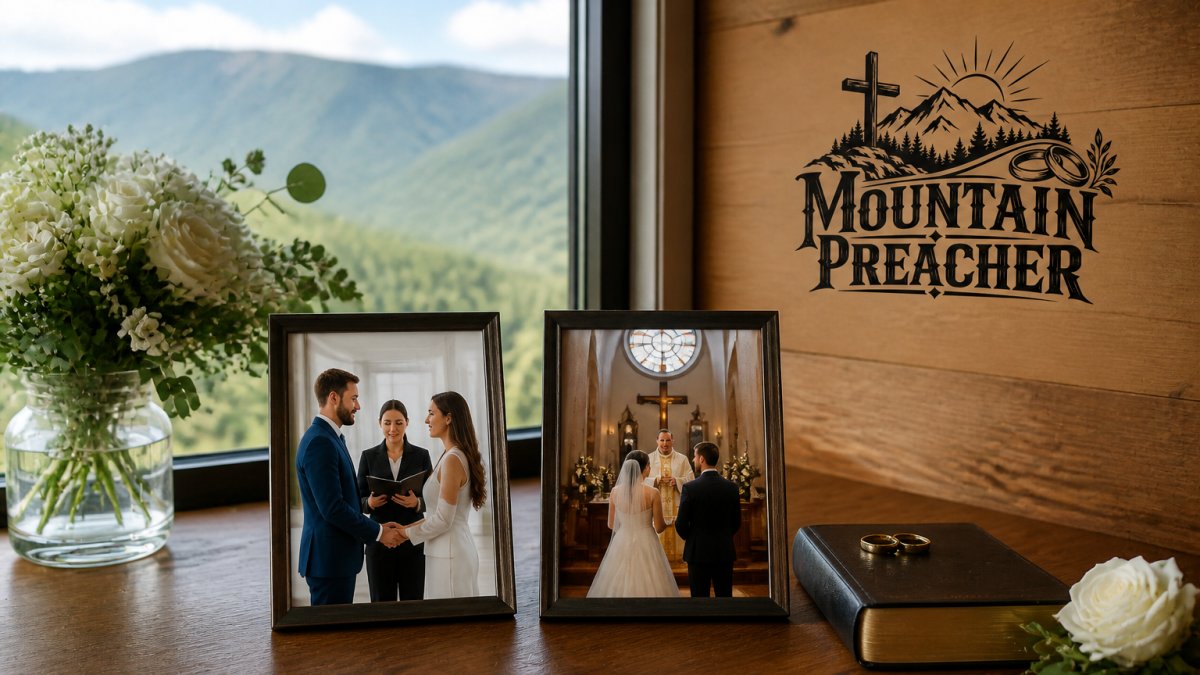
Option 2: Dual-role officiant Some ordained clergy are also registered with the state as authorized to solemnize marriages. They can perform a ceremony that satisfies both legal and religious requirements simultaneously.
Option 3: Two ceremonies on the same day A civil ceremony in the morning, a religious ceremony in the afternoon. Both happen on your wedding day, but they're separate events.
Many destination couples in the Great Smoky Mountains choose this approach.
The key is understanding which ceremony creates the legal marriage. If you have a religious ceremony first without a civil officiant signing the license, you're not legally married until you complete the civil process.
Choosing Between Civil and Religious: What Matters Most
The choice between civil and religious ceremony depends on what matters most to you as a couple. Consider these questions:
Is legal recognition important? Both civil and religious ceremonies can be legally binding if the right officiant signs the license. But only a civil ceremony automatically creates a legal marriage. If legal recognition is your priority, you need at least a civil ceremony.
Do you want spiritual or faith-based elements? A religious ceremony centers on faith traditions, prayers, and community.
What does your faith community expect? If you're part of a religious community, there may be expectations about how you marry. Some faiths have specific requirements or preferences.
How important is personalization? Civil ceremonies offer maximum personalization, you design the entire experience. Religious ceremonies follow established traditions, though many now allow personalization within that framework.
What's your timeline? Civil ceremonies can be arranged quickly, even last-minute. Religious ceremonies often require more planning, preparation, and coordination with clergy or faith communities.
Are you and your partner on the same page? If one partner wants a religious ceremony and the other doesn't, having both ceremonies (or a hybrid approach) might honor both perspectives.
At Mountain Preacher, we've worked with couples navigating all these questions. Some arrive certain about their choice; others discover through conversation that a combination approach works best.
Whether you're planning a civil ceremony, a religious celebration, or both, the key is understanding your legal requirements and what feels meaningful to you as a couple. We specialize in both civil and Christian ceremonies, and we're experienced with last-minute arrangements, elopements, and personalized celebrations. Check Availability to discuss your ceremony with Pastor Jody, who brings over 40 years of ministry experience and a warm, stress-free approach to making your day meaningful.
Frequently Asked Questions
What is the main difference between a civil and religious wedding ceremony?
A civil wedding ceremony is conducted by a government official like a justice of the peace and focuses on the legal marriage contract. A religious wedding ceremony is performed by a religious officiant and incorporates faith-based rituals, readings, and traditions. Both can be legally binding, but a civil ceremony emphasizes legal recognition while a religious ceremony emphasizes spiritual significance and community worship.
Can a religious wedding ceremony be legally recognized without a separate civil ceremony?
Yes, a religious wedding ceremony can be legally binding if the religious officiant is authorized by the state to solemnize marriages. Many priests, ministers, rabbis, and other religious leaders hold this legal authority. However, you must still obtain a marriage license from the government and ensure the license is properly signed and registered for the ceremony to be legally recognized.
How long does a typical civil wedding ceremony take?
A civil wedding ceremony's length depends on your preferences and what elements you choose to include.
What are the basic civil wedding ceremony requirements to make it legally valid?
To have a legally valid civil ceremony, you need a valid marriage license issued by your state and an authorized officiant (justice of the peace, judge, or authorized religious leader). The officiant must sign and return the license to the appropriate government authority within the required timeframe for the marriage to be officially registered.