 blog
How to Choose a Non-Denominational Wedding Officiant in Gatlinburg
Quick Summary
A non-denominational wedding officiant is a minister or officiant not tied to a specific church tradition like Baptist, Methodist, or Catholic. In Gatlinburg, Mountain Preacher offers both Christian and civil ceremony options, so couples can shape the service to fit what they want.
- Non-denominational does not automatically mean non-religious; ask whether the officiant includes prayer or scripture.
- Check reviews across several sources and look for the same specific details repeated.
- Look for reviews that describe response time before the wedding, not just the ceremony itself.
- Ask for an itemized quote covering the ceremony fee, travel, script preparation, and add-ons.
- Tennessee requires a marriage license before the ceremony, so plan time to obtain it early.
Table of Contents
- What Non-Denominational Means for a Mountain Ceremony
- How to Read Non-Denominational Wedding Officiant Reviews
- Wedding Officiant Questions to Ask Before You Book
- Building a Personalized Wedding Ceremony Script
- Wedding Officiant Cost and What Affects the Price
- Booking a Same Day Wedding Officiant Gatlinburg
- Book Your Gatlinburg Ceremony With Mountain Preacher
- Frequently Asked Questions
What Non-Denominational Means for a Mountain Ceremony
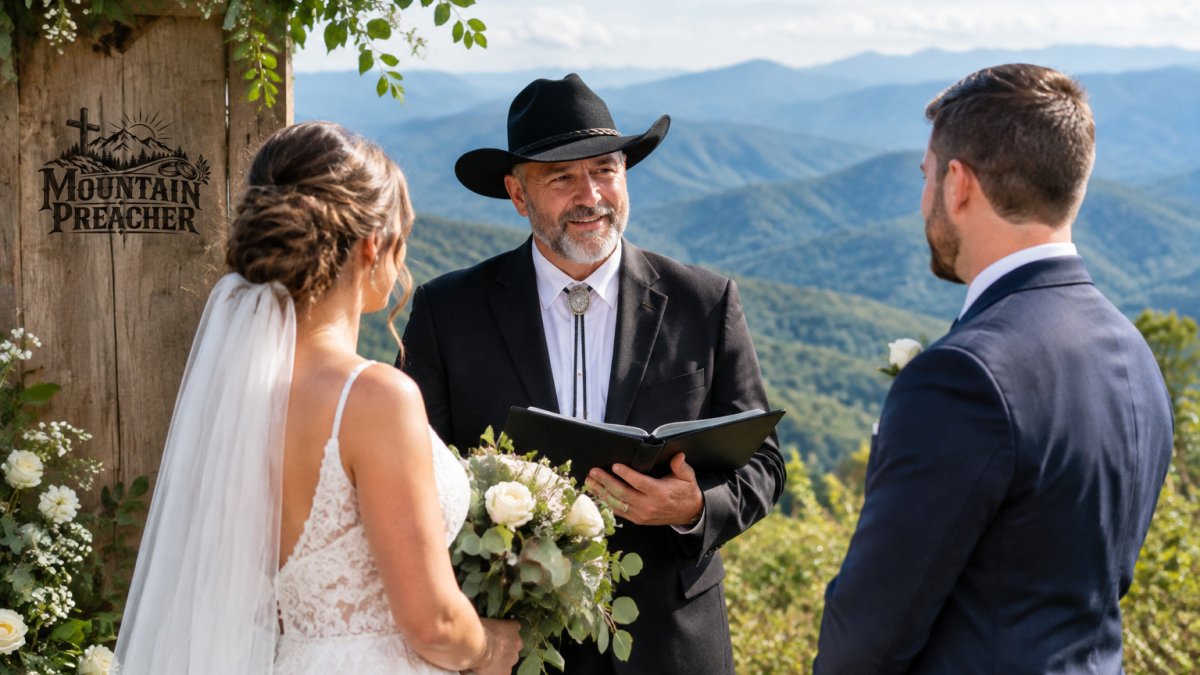
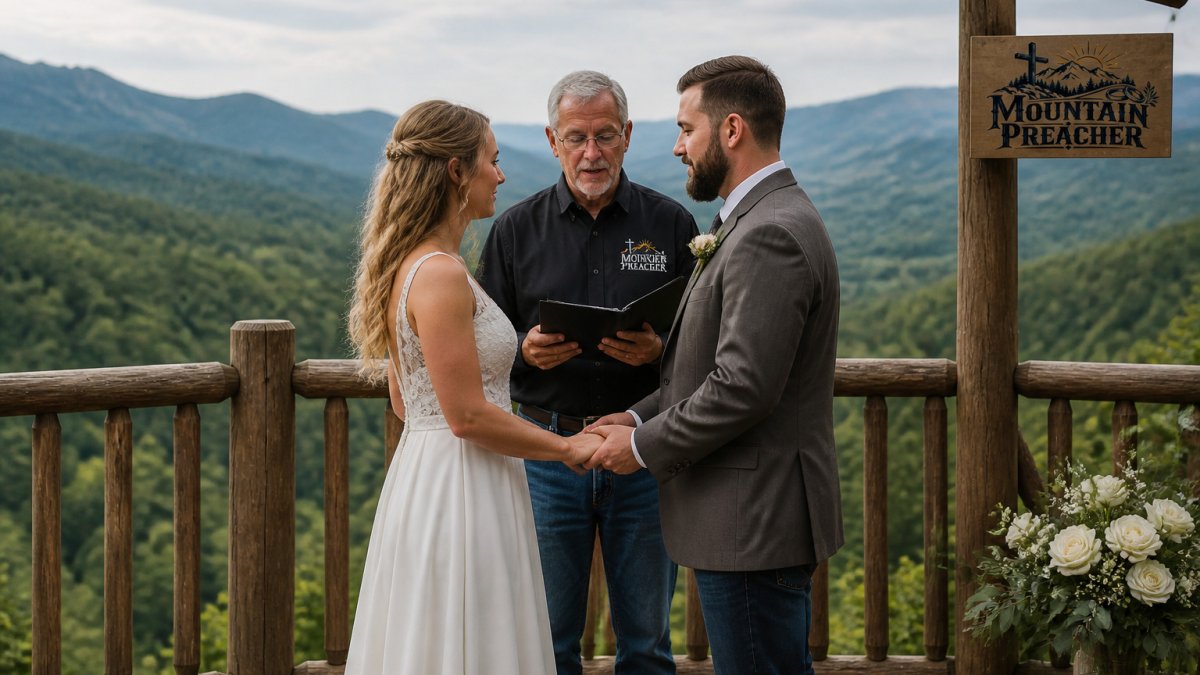
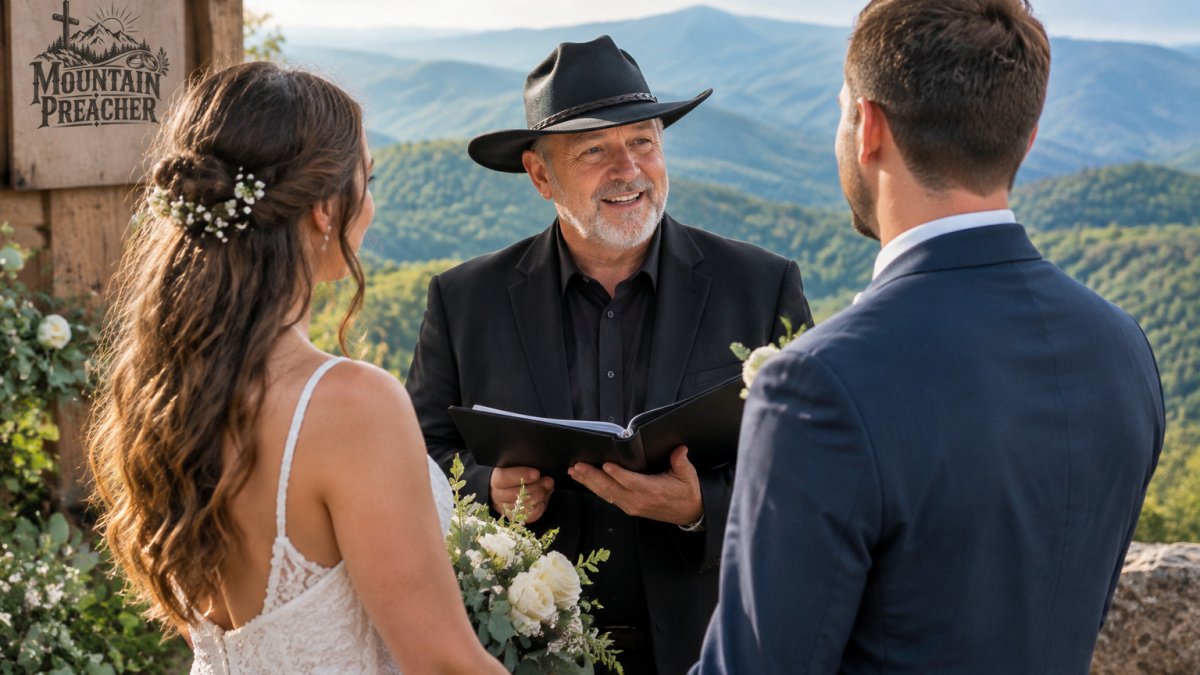
A non-denominational wedding officiant is a minister or officiant who is not tied to a specific church tradition, such as Baptist, Methodist, or Catholic. In Gatlinburg, that flexibility matters because many couples arrive from out of state with mixed backgrounds, mixed faiths, or no faith tradition at all. Mountain Preacher offers both Christian and civil ceremony options, so couples can shape the service to fit what they actually want.
The distinction is worth understanding before you book. Non-denominational does not automatically mean non-religious. A non-denominational officiant may include prayer, scripture, or spiritual language, while a secular or civil officiant will typically keep the ceremony free of religious content. Ask directly which style an officiant offers and whether they will adjust the language to match your comfort level.
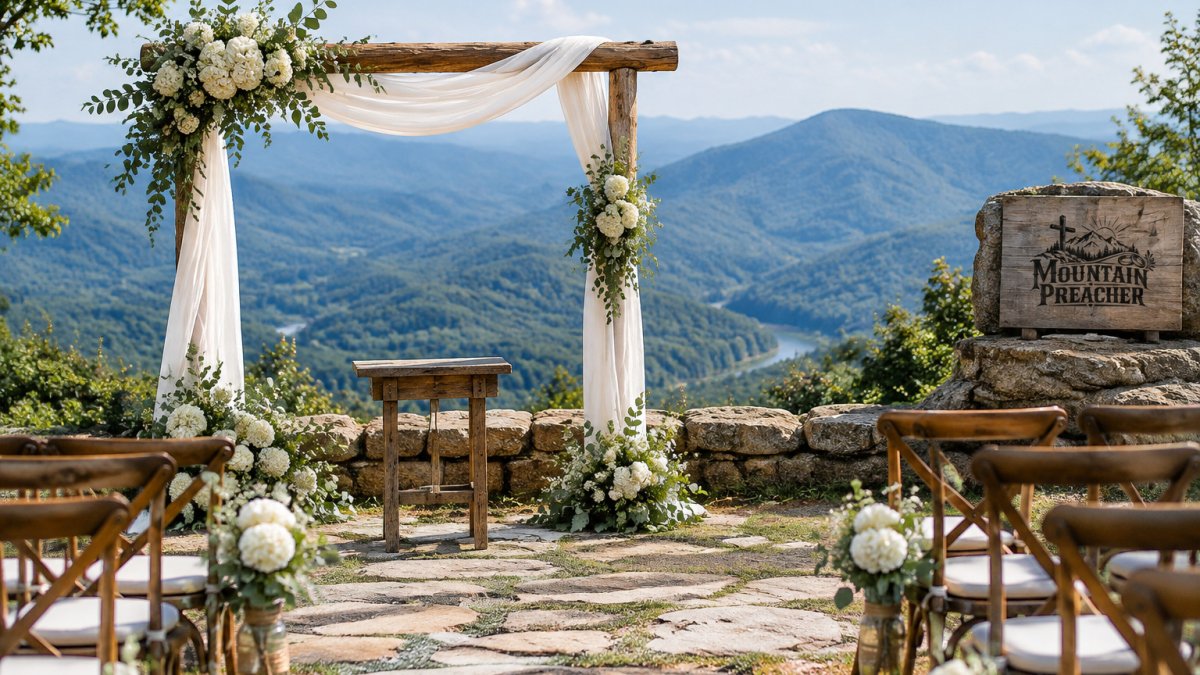
For a mountain ceremony, the setting often drives the tone. A cabin porch or an overlook at sunrise calls for something simpler and more personal than a formal sanctuary service. A good officiant will adapt to that. Look for someone who can keep the ceremony brief, warm, and tailored to your location rather than reading from a template.
How to Read Non-Denominational Wedding Officiant Reviews
Reviews are the fastest way to gauge how an officiant handles real ceremonies, but most couples read them wrong. Vendor directories, community recommendation threads, and individual officiant pages each carry a different kind of evidence. Treating them as one undifferentiated star rating is how couples end up surprised on the day.
Start with a simple verification method. For any officiant you are considering, pull reviews from several places, such as the officiant's own website or booking page, a wedding vendor directory, and Google or a community forum. Then look for the same specific detail repeated across sources. A pattern across unrelated reviewers is far stronger evidence than a single five-star paragraph. A common pattern is that the most useful reviews name the ceremony type (elopement, vow renewal, cabin ceremony) and the guest count, because those details tell you whether the reviewer's situation matches yours.
Weigh the review by what it actually describes. A review that mentions punctuality, how the officiant handled a rainy outdoor backup plan, or how the vows were personalized tells you far more than "she was great." Look for reviews that describe the officiant's response time before the wedding, not just the ceremony itself, since slow communication is one of the most common complaints couples report about wedding vendors generally. A review that says the officiant answered questions within a day is concrete; a review that says the officiant was "responsive" is not.
Pay attention to the mix of comments. Reviews that all praise the same qualities can be useful, but so can the occasional critical review if the officiant responded professionally. A critical review with a calm, specific reply from the officiant is often a better trust signal than a wall of perfect scores, because it shows how the officiant behaves when something goes wrong.
Match the review to your situation. If you are planning an elopement, look for reviews from couples with small guest lists, same-day bookings, or destination ceremonies. Reviews from large church weddings may not reflect how an officiant handles a waterfall ceremony with five guests. If you are planning a vow renewal, look specifically for renewal reviews, since the tone and length differ from a first wedding. When you contact the officiant, ask whether you can speak with a past couple whose ceremony resembled yours; an officiant who keeps in touch with past clients can usually arrange it, and the answer itself tells you something about how they run their business.
Wedding Officiant Questions to Ask Before You Book
Before you commit, ask questions that reveal how the officiant will actually work with you. Start with logistics: Will you be available on our date? How far in advance do you need to be booked? Do you travel to cabins, overlooks, and waterfalls in the national park, and are there any additional fees for locations outside Gatlinburg, Pigeon Forge, or Sevierville?
Next, ask about the ceremony itself. Can you adjust the tone from religious to secular? Will you meet with us beforehand to learn our story? How long is the typical ceremony? Clear answers here prevent surprises on the day.
Finally, ask about the legal side. Will you walk us through Tennessee marriage license requirements, or should we handle that ourselves? Officiant responses on this point vary, so get the answer in writing if possible.
Building a Personalized Wedding Ceremony Script
A personalized script is what separates a memorable ceremony from a generic one. The strongest scripts usually include a brief welcome, a short reflection on the couple's story, the vows, the exchange of rings, and the pronouncement. Many couples also add a reading or a moment for family members who are present.
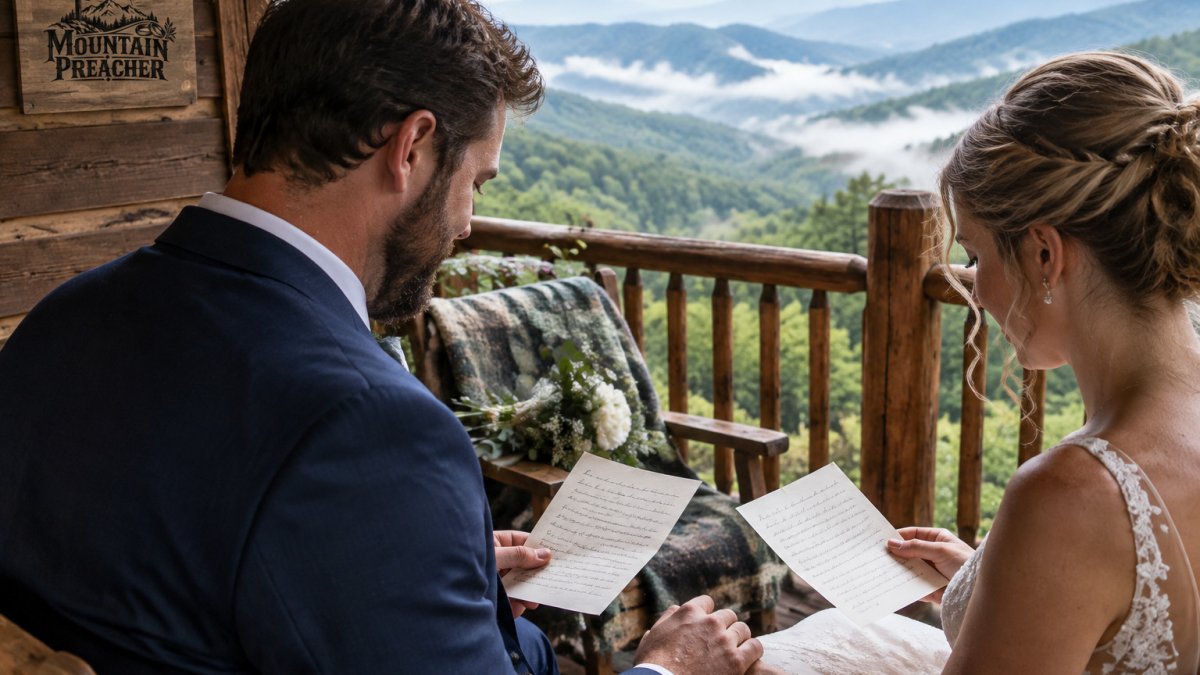
Start by gathering material. Ask each partner to share how they met, a memory that captures their relationship, and what they value most in each other. A good officiant will turn those details into a script that sounds like you, not like a template.
For vows, decide whether you want traditional, personal, or a mix. Some couples write their own words. Others use a standard vow and add a personal paragraph. Either approach works, as long as both partners are comfortable with what they will say out loud.
Secular, Civil, and Faith-Based Options Compared
Couples often find the choice between secular, civil, and faith-based ceremonies confusing, so it helps to compare them directly. A faith-based ceremony includes religious readings, prayer, or references to God, and it suits couples who share a faith tradition. A civil ceremony is legally binding but contains no religious content, which works well for couples who want a straightforward, non-religious service. A non-denominational ceremony sits in between: it can be spiritual without tying the service to a specific church.
| Ceremony Type | Religious Content | Best For |
|---|---|---|
| Faith-based | Prayer, scripture, God references | Couples who share a faith |
| Non-denominational | Optional, adjustable | Mixed or flexible beliefs |
| Civil/secular | None | Non-religious couples |
Whichever style you choose, confirm with your officiant that the ceremony will be legally valid in Tennessee.
Wedding Officiant Cost and What Affects the Price
Officiant pricing depends on several factors, including the date, the ceremony location, how far the officiant must travel, whether the ceremony is same-day, and what additional services are included, such as script writing or rehearsal time. Because these variables differ by booking, pricing depends on the specifics of each ceremony. For current pricing, contact Mountain Preacher directly for a written quote that lists exactly what is included.
That said, a quote is only useful if you know what to compare. Ask for the price broken into four lines: the base ceremony fee, travel to the location, script or vow preparation, and any add-ons such as a rehearsal, a signing-table setup, or a same-day rush. A quote that lists one lump sum hides the variables that drive cost, and those variables are exactly where two officiants quoting the same total can end up very different in value.
Several factors can move the price up or down. Date and time often matter most, and travel distance matters too, since cabins, overlooks, and trailheads around the national park are not all equally accessible. Ceremony length and customization also affect preparation time. Same-day and rush bookings may carry an added cost, and rehearsal attendance, if you want it, may be a separate line item.
When comparing quotes, check whether the price covers travel to outdoor locations, script preparation, and any marriage license guidance. Ask whether there are fees for rush bookings or same-day ceremonies, since those can change the total. A clear, itemized quote is the best defense against hidden costs.
Two practical habits make the comparison fair. First, give every officiant the same information, including date, time, location, guest count, and whether you want a rehearsal, so the quotes are answering the same question. Second, ask each officiant to confirm in writing what happens if the ceremony runs long, if the weather forces a location change, or if the date shifts. Those contingencies are where pricing surprises live, and an officiant who answers them clearly in the quote is giving you a more complete price than one who only quotes the ceremony itself.
Booking a Same Day Wedding Officiant Gatlinburg
Same-day ceremonies may be possible in the Gatlinburg area, but availability depends on the officiant's schedule and the date. Start by checking availability directly. Have your preferred date, time, location, and guest count ready when you reach out.
Plan the marriage license step early. Tennessee requires a license before the ceremony, so build time into your schedule to obtain it at the county clerk's office. A good officiant will tell you what documents you need and whether anything must be completed in advance.
Once your details are confirmed, you can contact Mountain Preacher to check availability for your date. Early contact gives you the best chance of securing the time and location you want.
Book Your Gatlinburg Ceremony With Mountain Preacher
Choosing a non-denominational officiant comes down to tone, clarity, and reliability. Mountain Preacher offers warm, professional officiant services for elopements, cabin weddings, and vow renewals throughout the Great Smoky Mountains, with both Christian and civil options. Reach out to check availability, ask your questions, and request a written quote that matches your plans.
Frequently Asked Questions
What is an appropriate amount to pay a wedding officiant?
Officiant fees vary widely depending on the ceremony date, location, travel distance, length of service, and whether rehearsals or extra services are included. Couples should not rely on a single figure from a review or forum post. Request a written quote from each officiant that lists the base fee, any travel or mileage charges, and any add-ons, then compare totals rather than headline prices. For current pricing and availability, contact Mountain Preacher directly for a quote tailored to your date and location.
Who should officiate a non-religious wedding?
A non-religious or secular wedding can be officiated by a licensed civil officiant, a judge or court official in some counties, or a non-denominational minister who is comfortable writing a ceremony without religious content. The key question is whether the officiant is legally authorized to solemnize a marriage in Tennessee and whether they will shape the ceremony around your values rather than a scripted church service. Ask for samples of past ceremonies to confirm the tone matches what you want.
How do I know if a wedding officiant is legitimate?
Confirm that the officiant is authorized to perform marriages in Tennessee and ask how they are ordained or credentialed. Check that they will provide the paperwork needed to file your marriage license and certificate with the county clerk. Read reviews that describe real ceremonies, and ask for references from couples married in similar settings. A legitimate officiant will answer these questions plainly and without pressure.
How long does a typical wedding ceremony last?
Most elopement and micro-wedding ceremonies last between 10 and 20 minutes, which leaves room for vows, a short reading or message, and the signing of documents. Longer faith-based ceremonies can run 30 minutes or more. Ask your officiant how long they expect the ceremony to take for your planned format so you can schedule the location, photographer, and any guests accordingly.