 blog
Intimate Cabin Wedding Ceremony Ideas 2026
Table of Contents
- Why Cabin Weddings Create Meaningful Intimate Celebrations
- Small Wedding Ceremony Ideas That Feel Personal and Intentional
- Intimate Wedding Ceremony Scripts That Reflect Your Story
- Personalized Wedding Vows and Meaningful Moments
- Short Wedding Ceremony Scripts for Elopements and Micro-Weddings
- Cabin Ceremony Decor, Florals, and Lighting on a Micro-Wedding Budget
- Logistics, Permits, and Planning Your Cabin Wedding Ceremony
- Frequently Asked Questions
Last Updated: October 21, 2026
Why Cabin Weddings Create Meaningful Intimate Celebrations
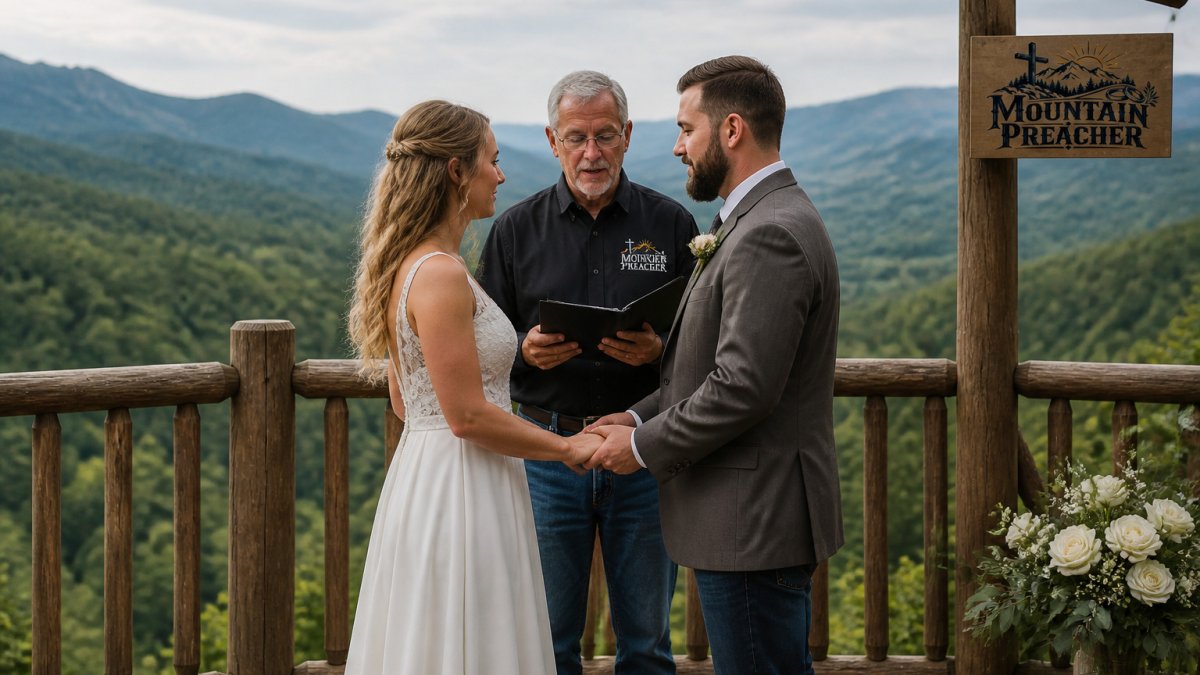
Cabin wedding ceremony ideas bring couples and their closest loved ones together in a setting that feels personal and intentional. An intimate cabin wedding ceremony doesn't mean less meaningful, it means more focus on your love story and the people who matter most.
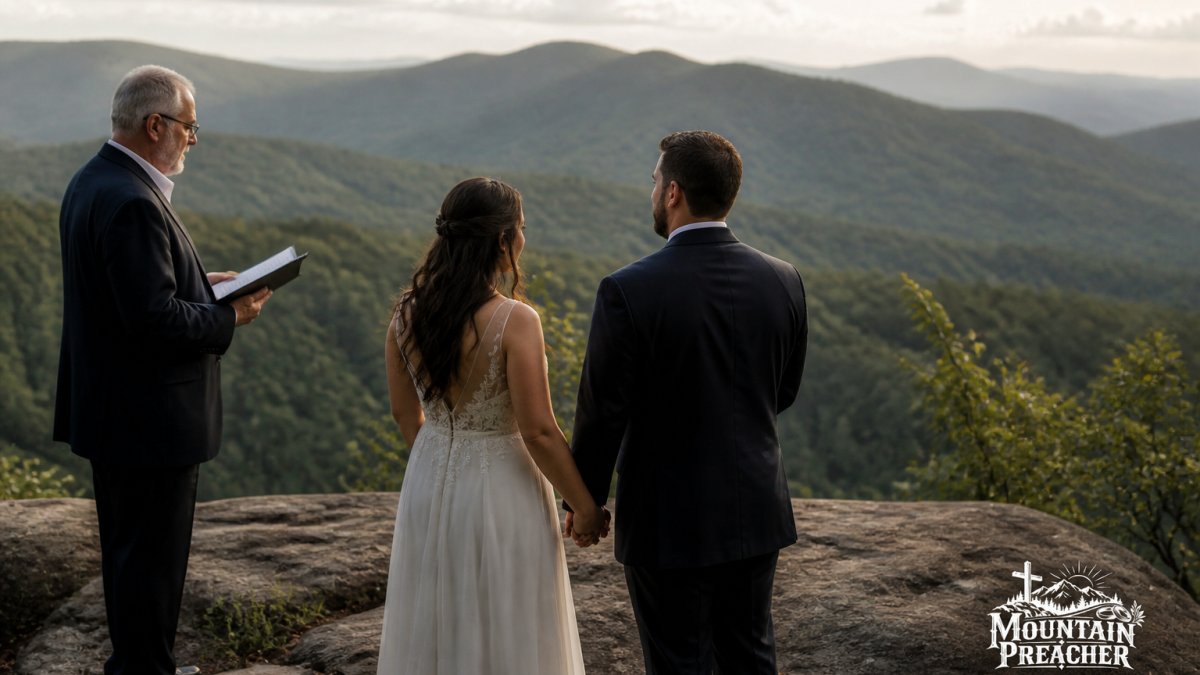
Cabin venues offer what ballrooms can't: authenticity. The natural backdrop, quiet setting, and close proximity of guests create a ceremony that feels genuine, you're sharing a moment with people who know you best, not performing for a crowd.
Small Wedding Ceremony Ideas That Feel Personal and Intentional
A small wedding ceremony thrives on personalization. With fewer guests, you can explore cabin wedding ceremony ideas and include meaningful touches larger weddings can't.
Consider these approaches:
- Handwritten vows exchanged privately before the ceremony, then read aloud to your guests
- A unity ritual that reflects your story: lighting a candle together, handfasting, or planting a tree
- Personalized ceremony programs with photos, quotes, or inside jokes
Ceremony Layout for Different Guest Counts
Your ceremony layout changes with your guest count, a cabin cozy with 20 can feel cramped with 50.
For 30-50 guests: Use two longer rows with a center aisle, position the altar near a window or natural focal point, and leave standing room if seating is limited.
For elopements (2-10 guests): Skip chairs and stand in a circle or small group for the most intimate setting.
Seasonal Cabin Ceremony Themes
Plan your theme around what each season naturally provides.
Spring: Fresh greenery, flowering branches, and pastels. Keep decor minimal, nature does the work.
Summer: Long daylight hours let you start later and still have natural light.
Fall: Warm colors, harvest elements, and cooler temperatures make for comfortable outdoor moments. Changing leaves mean almost no additional decor.
Winter: Snow-covered landscapes create a dramatic backdrop. Plan for shorter daylight hours and heating inside.
Intimate Wedding Ceremony Scripts That Reflect Your Story
An intimate wedding ceremony script sets the tone for everything that follows. Unlike formal large weddings, a small ceremony can be conversational and warm.
Couples appreciate a personal story or anecdote about how they met, it gives guests insight into your relationship and makes the ceremony feel genuine.
Your script should answer these questions:
- Who are you as individuals?
- What brought you together?
- What do you promise each other?
A 15-20 minute ceremony feels natural for an intimate setting. Shorter ceremonies (8-10 minutes) work for elopements.
Personalized Wedding Vows and Meaningful Moments
Personalized vows tell your specific story. Include details only your partner would recognize: an inside joke, a moment that changed everything, a promise that matters.
Start by answering these prompts:
- What do you love most about your partner?
- What moment made you know this was the person?
- What do you want to promise them?
Write in your own voice, avoid flowery language unless that's genuinely how you speak. Authenticity matters more than eloquence.
Practice reading your vows aloud beforehand to find the right pace and emotional tone, and to catch phrases that feel awkward spoken.
Short Wedding Ceremony Scripts for Elopements and Micro-Weddings
An elopement ceremony script is typically 5-10 minutes long. This brevity doesn't mean less meaning, it means every word matters.
A short script should include:
- Opening: The officiant welcomes the couple and any witnesses
- Personal context: A sentence or two about who you are and why you're here
- Vows: You exchange vows (written or spoken in the moment)
- Rings: You exchange rings with a brief promise
- Pronouncement: The officiant declares you married
- First kiss: You seal the moment
For a same-day or last-minute ceremony, Mountain Preacher can create a script that feels personalized even when time is short, focus on what matters most to you as a couple.
Give witnesses a small role, holding the rings, signing the license, or offering a blessing, so they're participants, not spectators.
Cabin Ceremony Decor, Florals, and Lighting on a Micro-Wedding Budget
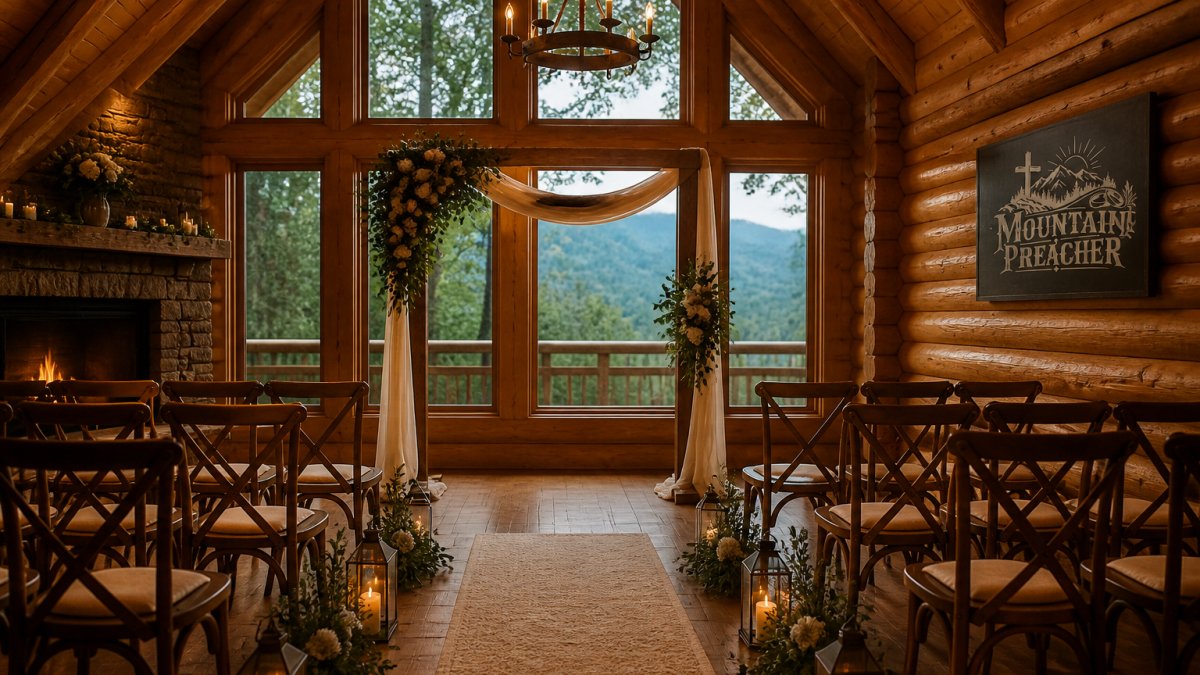
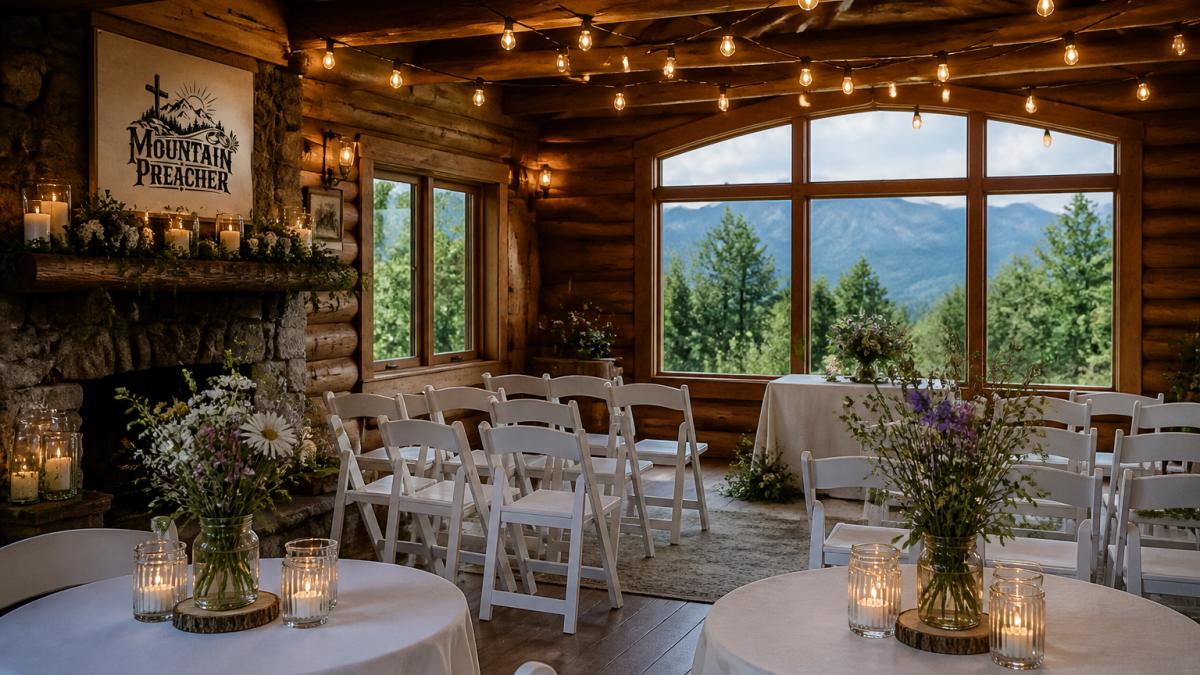
Cabin interiors already have character, your decor should enhance what's there, not fight it. The difference between styled and cluttered comes down to three decisions: what you rent versus buy, how you light the space after dark, and how much you spend per line.
Start With What the Cabin Provides
Walk the space before buying anything and inventory the built-in backdrop: exposed beams, stone fireplaces, picture windows, porches, vaulted ceilings. Those features are free decor. Build your plan around one focal point, a window with a view, a fireplace, or a wide porch opening, and let everything else support it.
A Realistic Line-Item Decor Budget
Most intimate cabin ceremonies spend low-to-mid four figures on decor, florals, and lighting combined, but the split matters more than the total. A common pattern for 20-40 guests:
- Ceremony florals (bouquet, boutonniere, altar piece): $400-$900.
- Tablescape florals and greenery: $300-$700. Bud vases and loose greenery cost far less per table than full centerpieces.
- Rental chairs and linens: $3-$8 per chair for folding or wooden chairs, plus delivery. For 30 guests, budget $150-$350 with delivery.
Get quotes in writing, confirm delivery windows, and ask whether setup and breakdown are included, those fees are where budgets quietly break.
Florals That Fit a Cabin
Wildflowers, greenery, and branches read as intentional in a cabin; tight formal arrangements can look out of place. Work with a local florist who knows what's in season, or gather greenery yourself if the cabin owner and land manager allow it, never cut from protected or private land without permission. A small bridal bouquet, one or two altar arrangements, and bud vases are enough.
Lighting Is the Real Decor
Lighting does more for cabin atmosphere than any centerpiece. Plan it in layers:
- Ambient: overhead fixtures or a few uplights so guests can see each other.
- Task and safety: path lights or lanterns along walkways, steps, and the aisle so no one trips after dark.
- Accent: string lights, fairy lights, or candles at eye level to create warmth and flatter photos.
Windows carry daytime ceremonies, but overcast days and late-afternoon starts need backup. Soft, warm bulbs (around 2700K) feel more intimate than cool white overheads. In a rental cabin, confirm the electrical load before plugging in dozens of strands, older cabins may share a circuit with the kitchen or water heater. Battery-powered LEDs avoid that problem and are safer around fabric and dried florals.
Cabin ceilings are often lower than traditional venues, and beams sit lower still. Measure clearance before renting an arch or hanging installation, and keep candles and open flames away from draping fabric, dried florals, and pine boughs. Many rental agreements prohibit open flames outright, check before you buy.
Spend on light and one focal floral piece, rent the rest, and keep a $200-$300 contingency for cords, clips, delivery, and the items you didn't know you needed. That combination is what separates a styled cabin from a decorated one.
Logistics, Permits, and Planning Your Cabin Wedding Ceremony
Cabin weddings involve logistics that ballroom venues handle for you. Couples with calm ceremony days verify infrastructure, access, and permissions months ahead instead of discovering limits the week of. This is the part most inspiration articles skip, and the part that decides whether your ceremony happens as planned.
Permits, Rules, and Lodging Capacity
Start with the cabin owner or property manager and get answers in writing:
- Is the property zoned or allowed to host events? Many short-term rentals and private cabins prohibit ceremonies, or cap guest counts at the number of overnight occupants. A cabin that sleeps 10 may not legally host 40 for a ceremony.
- Guest capacity and parking limits. Ask for the maximum headcount and the maximum vehicle count separately, they are often different numbers.
- Noise and quiet hours. Most rental agreements include quiet hours, commonly starting in the evening. Amplified sound may be restricted or banned. Plan your ceremony time and any music around those windows.
If the property is on federal land or in a national forest, a special-use permit may be required for a ceremony, check with the managing agency before booking. For the marriage license itself, requirements vary by state and county: confirm the issuing office, validity window, waiting period, and whether both partners must appear in person. Build license acquisition into your timeline rather than assuming it's a same-week task.
Infrastructure: Power, Water, Restrooms, and Connectivity
A cabin is a home, not a venue, and its systems have limits. Verify these before finalizing the guest list:
- Power: Confirm the electrical service and whether vendors (caterer, DJ, photographer) can plug in. Older cabins may have limited circuits. Ask whether a generator is needed and who supplies it.
- Water and restrooms: A septic system sized for a family of six will not handle 40 guests comfortably. Ask about restroom count and whether portable restroom rental is required or recommended for your headcount.
- Heating and cooling: Confirm the cabin's heating capacity for your season and guest count, and whether doors and windows can stay open during the ceremony without losing heat.
Access, Parking, and Weather Backup
Roads to cabins are often unpaved, steep, or narrow. Drive the route yourself in the season you're marrying, and ask the owner about winter plowing, mud season, and low-clearance vehicles.
Do the parking math: count vehicles, not people. If 30 guests arrive in 15 cars and the driveway holds 6, you need a plan, a shuttle from a nearby lot, carpool coordination, or a signed overflow area that doesn't block emergency access.
Every outdoor cabin ceremony needs a defined backup. Decide in advance:
- The trigger: a specific forecast threshold or time of day when you move indoors.
- The indoor location: which room or covered porch, and how chairs get rearranged.
- Who decides and who moves what: name one person and give them authority.
Accessibility and Guest Comfort
Rustic settings are charming until a guest with a walker meets a gravel path. Ask in advance about mobility needs and plan for them:
- Firm, level routes from parking to the ceremony space; gravel and mulch are difficult for wheels and heels.
- Seating with backs and armrests for guests who need support standing up.
- Temperature management, blankets and heaters for cool evenings, shade and water for warm afternoons.
Contact your cabin owner at least 3 months ahead to confirm they allow ceremonies and to get capacity, parking, noise, and insurance terms in writing. Some private cabins have restrictions you won't find online, and discovering them late can force a venue change.
We confirm arrival times, provide clear directions, and coordinate with your other vendors. For couples planning last-minute or same-day ceremonies, this coordination is especially valuable.
Frequently Asked Questions
What should you include in a short, intimate wedding ceremony?
A meaningful short ceremony typically includes a welcome and acknowledgment of guests, an exchange of vows or promises, a ring or symbolic exchange, and a closing pronouncement. Most intimate cabin wedding ceremonies run 15-20 minutes. You can personalize it by writing your own vows, incorporating a meaningful reading, or exchanging handwritten letters. The key is choosing elements that reflect your relationship and values, not filling time with tradition for tradition's sake.
How can you personalize a cabin wedding ceremony to make it feel uniquely yours?
Personalization transforms a ceremony from generic to memorable. Write your own vows that tell your story, choose a location within the cabin or on the grounds that holds meaning for you, incorporate a ritual that matters to you (handfasting, candle lighting, or a symbolic object), and invite only the people who know you best. You can also weave in your shared interests, inside jokes, or cultural traditions. A skilled officiant can help you blend these personal touches into a cohesive, flowing ceremony that feels authentically you.
How long should a small, intimate wedding ceremony last?
Intimate cabin ceremonies typically last 15-30 minutes, depending on the elements you include. A simple civil ceremony with vows and ring exchange takes about 15 minutes. Adding a reading, unity ritual, or longer personalized vows extends it to 20-25 minutes. Most guests prefer brevity in a small setting; the focus is on the emotional significance of the moment, not the length. An experienced officiant can guide you on pacing so the ceremony feels unhurried and meaningful without dragging.
What permits or rules do I need to know about for a cabin wedding ceremony in the mountains?
Permit requirements vary by location and cabin ownership. Private cabin venues on private land typically don't require ceremony permits, but you should confirm with the property owner. If you're using a cabin near or within national parks or public lands, you may need permits for gatherings or photography. Tennessee marriage licenses are required for all legal ceremonies and take just a few minutes to obtain. An experienced local officiant familiar with mountain venues can walk you through specific rules for your chosen location and help ensure everything is compliant.