 blog
Where Should You Elope in the Smokies?
Last Updated: October 26, 2026
Quick Summary
When you elope in the smokies, choose from distinct settings like Cades Cove valley meadows, Foothills Parkway overlooks, Greenbrier riverside groves, waterfalls, or Kuwohi at 6,643 feet. Each location balances natural beauty with accessibility, permit requirements, and privacy, so select the site that matches your vision, guest needs, and timeline.
- Ceremonies in Great Smoky Mountains National Park require a special use permit from the National Park Service submitted several weeks in advance.
- Group size caps vary by location and are set in the permit; small elopements with the couple, officiant, and a few guests are easiest to permit.
- Popular sites like Kuwohi and Cades Cove draw heavy crowds in peak season; early morning and weekday dates offer quieter alternatives.
- Accessibility ranges from roadside overlooks requiring minimal walking to steep waterfall trails unsuitable for mobility limitations or formal attire.
- Tennessee marriage licenses require both parties to appear in person with valid ID at a county clerk's office, with no waiting period.
Table of Contents
- Why the Smokies Are Perfect for an Elopement Ceremony
- Smoky Mountain Elopement Locations Worth Considering
- Great Smoky Mountains Wedding Permits and Regulations
- Gatlinburg Elopement Packages and Nearby Ceremony Options
- Accessibility, Crowds, and Seasonal Planning for Your Ceremony
- Planning Your Elopement Ceremony with an Experienced Officiant
- Frequently Asked Questions
Why the Smokies Are Perfect for an Elopement Ceremony
Choosing where to elope in the smokies means balancing natural beauty with practical ceremony logistics.
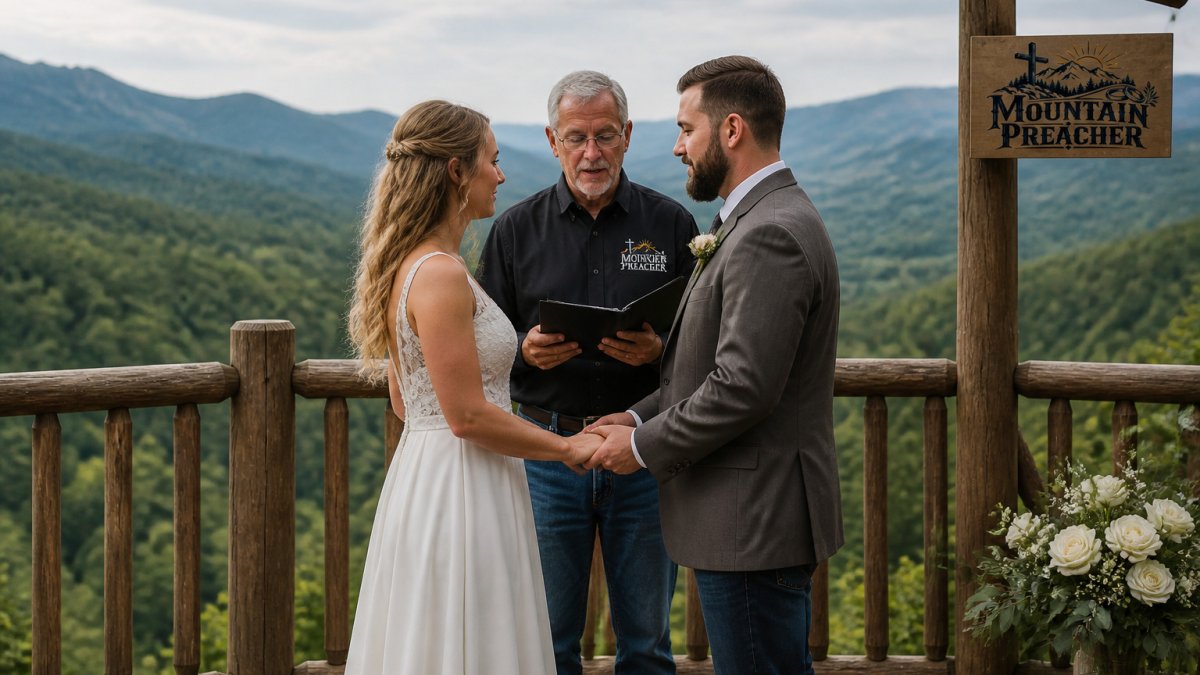
The Smokies deliver what destination couples want: stunning backdrops, solitude, and flexibility.
The best location isn't always the most famous one, it's the one that matches your vision, fits your timeline, and works logistically on your date.
Smoky Mountain Elopement Locations Worth Considering
The Smokies offer several distinct ceremony settings, each with different character, accessibility, and permit requirements. Learn about available ceremony locations and how Pastor Jody Secaur serves couples throughout the region. Knowing what each delivers helps you narrow your choice before committing to a date.
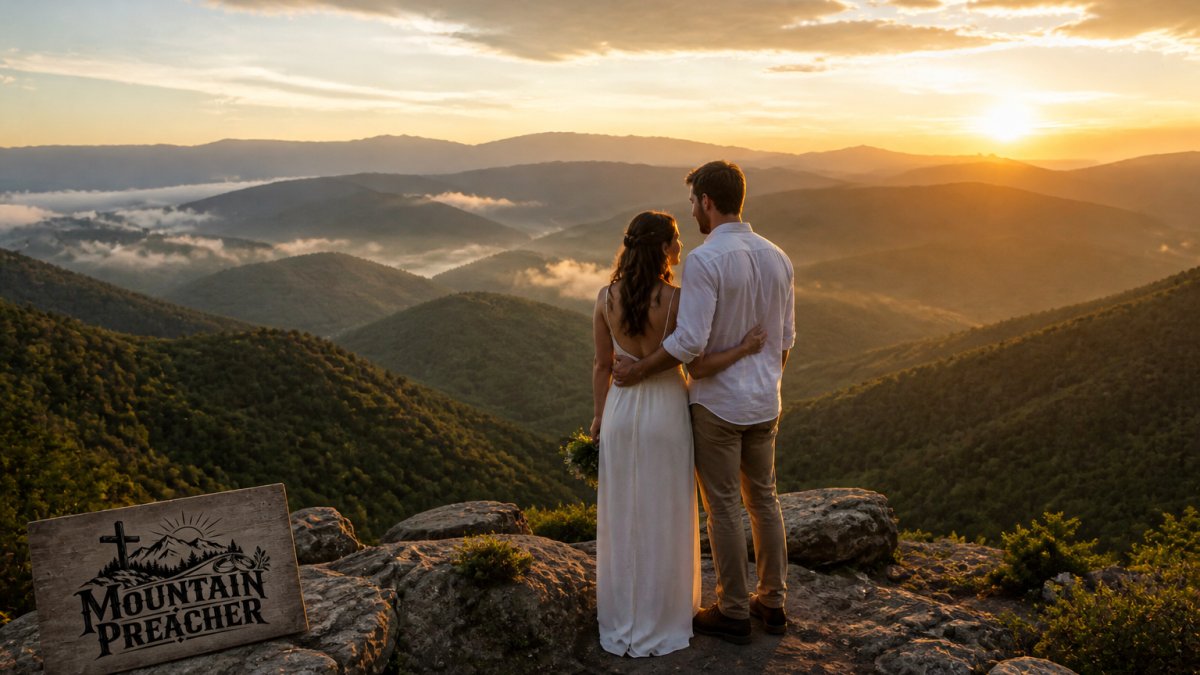
Cades Cove and Mountain-Valley Settings
Cades Cove delivers open meadow beauty framed by mountain ridges, with flat, accessible ceremony space and dramatic backdrops.
Cades Cove suits couples who want expansive views without extreme elevation gain.
The trade-off: Cades Cove draws tourists year-round, even at dawn, and the valley's openness means less privacy than forest or waterfall settings.
Foothills Parkway Overlooks and High-Elevation Views
The Foothills Parkway offers roadside overlooks with sweeping valley vistas.
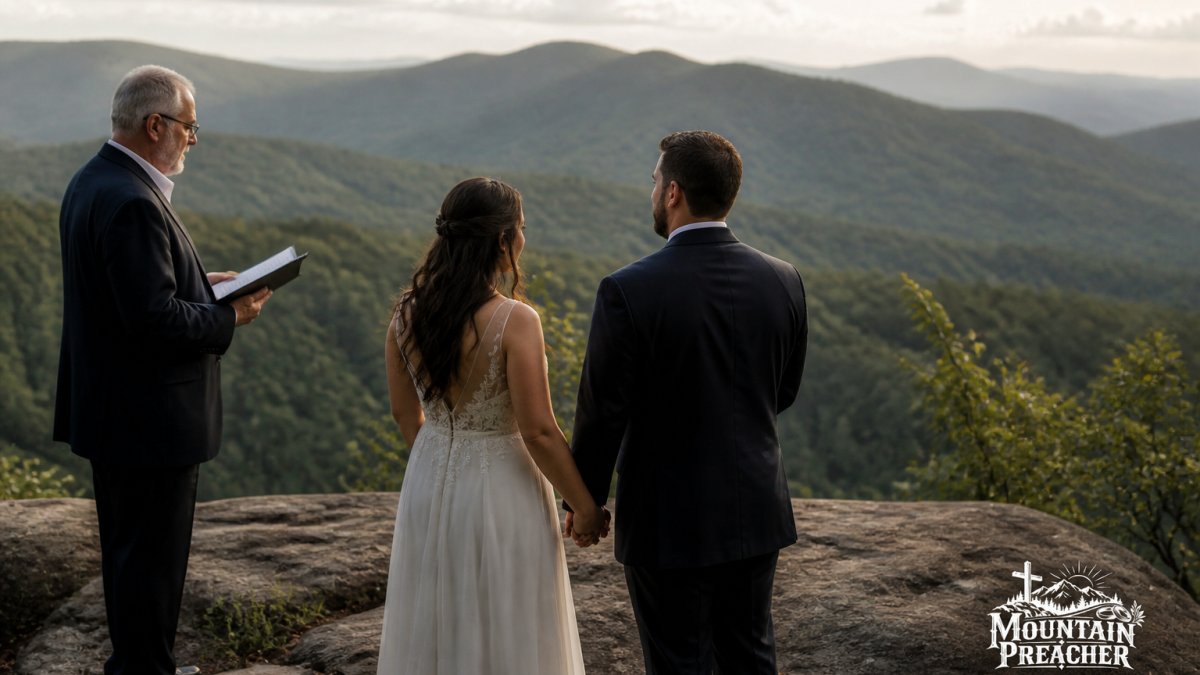
High-elevation backdrops create an "on top of the world" feeling, with views stretching for miles. Sunset ceremonies here are particularly striking, with golden light hitting ridges and valleys.
Watch out: Overlooks can be windy, especially in spring and fall, and weather changes quickly at elevation.
Greenbrier and Riverside Ceremony Locations
Greenbrier offers riverside beauty with old-growth forest atmosphere. The river flows through hemlock and rhododendron groves, creating intimate forest-and-water settings with flowing-creek sound and dappled light.
Riverside locations suit couples who want a forest ceremony feel without waterfall spray or extreme terrain.
The reality: Riverside spots often require short hikes on uneven terrain, and water access means muddy banks in wet seasons.
Waterfalls, Creeks, and Forest Settings
Waterfall ceremonies create dramatic natural backdrops with sound and movement. Laurel Falls, Mist Falls, and smaller cascades offer varying difficulty levels and privacy, while forest creeks provide softer water features.
Waterfall locations suit couples seeking theatrical, memorable backdrops. While the roar of a cascade creates a dramatic atmosphere, those who prefer a more curated landscape might consider intimate wedding venues that offer equally breathtaking vistas.
For elopements at a waterfall in the smokies, understand that popular falls draw day-hikers. Early morning or off-season timing helps secure solitude.
Kuwohi and Clingmans Dome High-Elevation Backdrops
Kuwohi (formerly Clingmans Dome) is the park's highest point at 6,643 feet (Kuwohi Observation Tower (U.S. National Park Service)).
High-elevation ceremonies feel exclusive and otherworldly, with unobstructed, dramatic views.
The challenge: Kuwohi requires a one-mile round-trip walk, much of it uphill.
Each Smoky Mountain elopement location offers distinct advantages and challenges across scenery, accessibility, and privacy.
| Location | Best For | Key Consideration |
|---|---|---|
| Cades Cove | Expansive views without extreme elevation | Year-round tourist crowds even at dawn |
| Foothills Parkway overlooks | Guests with mobility concerns | Windy at elevation, weather changes quickly |
| Greenbrier riverside | Forest ceremony feel with water features | Uneven terrain, muddy in wet seasons |
| Waterfalls and creeks | Dramatic, theatrical backdrops | Popular falls draw day-hikers, slippery terrain |
| Kuwohi (Clingmans Dome) | Exclusive, otherworldly high-elevation views | One-mile uphill walk, rapid weather changes, heavy crowds in peak season |
Great Smoky Mountains Wedding Permits and Regulations
Permits are the single most misunderstood part of planning an elopement in the park, and the rules are more specific than most inspiration lists suggest. Here is how the process actually works, and where couples most often get tripped up.
The permit you actually need
Ceremonies inside Great Smoky Mountains National Park require a special use permit issued by the National Park Service (Special Event Permits). The permit names your location, date, time window, and group size. Submit the application several weeks ahead, processing and location review take time and popular dates fill up. Do not book a photographer or officiant for a park site until you have confirmed permit availability for that date.
A permit for one location does not transfer to another. If weather or crowds force a last-minute move, you need to confirm the new spot is also permitted for ceremonies. Build a permitted backup into your plan.
Group size and ceremony limits
Group size caps vary by location and are set in the permit, not by a single park-wide number. Small elopements, the couple, officiant, and a handful of guests, are the easiest to permit. Larger groups face tighter location options and more scrutiny. Assume the cap includes everyone present at the ceremony site, not just invited guests, and confirm the exact number on your permit before inviting family.
Common restrictions that apply to most park ceremony permits:
- No amplified sound or speakers
- Ceremonies during daylight hours only (typically sunrise to sunset)
- Designated areas only, no off-trail or sensitive vegetation zones
The photography question
Personal photography of your own ceremony is generally allowed. What draws scrutiny is commercial photography and videography in the park, which can require its own authorization separate from the ceremony permit. If you are hiring a professional photographer, ask directly whether they hold the commercial-use authorization the park requires and whether their work at your specific site is covered.
Marriage license requirements
A valid marriage license is required regardless of where in the park you marry. In Tennessee, the license is issued by a county clerk's office, both parties must appear in person with valid government-issued ID, and there is no waiting period.
An ordained or otherwise authorized officiant must solemnize the ceremony for it to be legally valid. Confirm your officiant's authorization and bring the completed license and any required copies to the ceremony.
Location-specific rules to verify
Rules are not uniform across the park. Before finalizing a site, verify:
- Whether that specific area is open to ceremonies at all
- The group-size cap for that site
- Seasonal closures, road closures, and trail maintenance that affect access
Check the current special use permit guidance and application process before you commit to a date. Regulations and closures change, and the park's own guidance is the authority, not a blog post, including this one.
The permit is the gatekeeper. Confirm the site, the group cap, the photography authorization, and the license window before you book anything else. Everything downstream, photographer, officiant, lodging, depends on those four answers.
Gatlinburg Elopement Packages and Nearby Ceremony Options
Gatlinburg serves as the primary gateway to the Smokies and offers elopement-focused services and nearby ceremony locations.
Gatlinburg-area options include cabin ceremonies, private property venues, and guided mountain experiences.
These options sidestep some national park permit complexity while keeping the mountain atmosphere.
The trade-off: Gatlinburg-area venues lack the national park's dramatic natural backdrops.
Accessibility, Crowds, and Seasonal Planning for Your Ceremony
Scenery is the easy part. The locations that actually work are the ones your guests can reach, that aren't overrun on your date, and that have a realistic backup when mountain weather turns.
Access and terrain, site by site
Accessibility is a spectrum, and it interacts with attire, footwear, guests, and how much time you have.
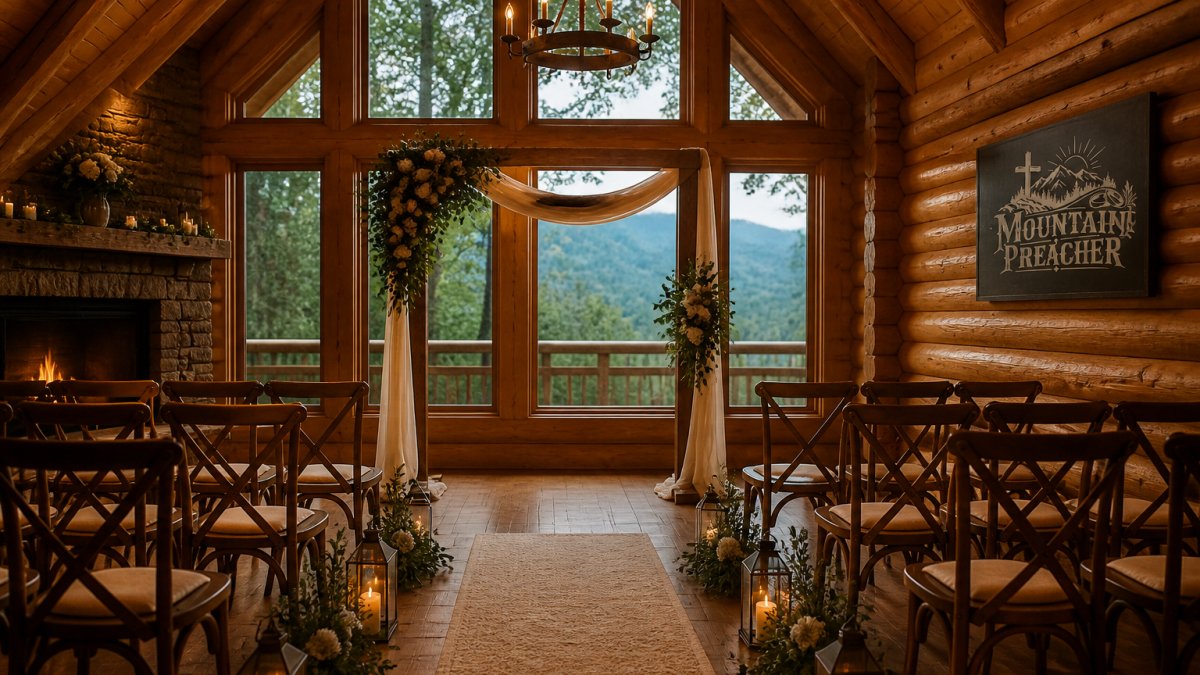
- Foothills Parkway overlooks: Roadside access with minimal walking. The most forgiving option for guests with mobility limitations, elderly family, or anyone in formal shoes. Parking is the main constraint; some pullouts are small.
- Cades Cove valley floor: Generally flat and walkable, which makes it one of the better choices for mixed-ability groups. The trade-off is that it is a driving loop with heavy traffic and limited roadside ceremony space.
- Greenbrier and riverside settings: Usually a short walk on uneven, sometimes muddy ground. Manageable for most guests but not for wheelchairs or anyone unsteady on their feet.
A useful rule: the more formal the attire and the more mobility-limited the guest list, the more you should lean toward overlooks and valley-floor sites and away from waterfall and high-elevation trails.
Crowds and realistic privacy
Every site on this list is public land. No permit gives you exclusive use, and no location guarantees solitude. What varies is how busy a site gets and when.
- Most crowded: Kuwohi and Cades Cove in peak season and fall color weekends; popular waterfall trails on summer mornings.
- Moderately busy: Foothills Parkway overlooks at sunset, especially on weekends.
- Quietest windows: Early morning year-round, weekdays over weekends, and the colder shoulder seasons.
If privacy matters, plan for early starts and have a mental script for sharing space gracefully. A common pattern is to arrive before other visitors, hold the ceremony quickly, and save portraits for after the crowd builds.
Weather and seasonal reality
Mountain weather changes fast, and elevation makes it worse. Pair each season with a realistic contingency rather than hoping for the best.
- Spring: Wildflowers and runoff. Mud, slick trails, and cool, wet weather. Backup: a covered cabin or private venue.
- Summer: Heat, humidity, and insects near water. Afternoon thunderstorms are common. Backup: an early-morning ceremony and a sheltered indoor option.
- Fall: The most popular season and the most crowded. Rain and wind are real risks, and color weekends fill parking. Backup: a weekday date and a private-property site.
Build a permitted or pre-arranged backup location into your plan before the ceremony day. Deciding where to move mid-storm is far harder than having a second option already confirmed.
Travel times and day-of logistics
Distances in the park are deceptive, winding roads and traffic make short map distances take far longer than expected. Build buffer time between lodging, ceremony site, and portrait locations, and confirm parking at each stop; a schedule that looks comfortable on paper often needs an extra hour once park traffic is factored in.
A quick comparison framework
Score each site on five criteria: scenery, access and walking distance, permit complexity, guest suitability, and best season. A less famous overlook everyone can reach often produces a better day than the iconic spot nobody can comfortably get to.
Planning Your Elopement Ceremony with an Experienced Officiant
An experienced officiant can guide you through Tennessee marriage license requirements and the ceremony itself.
Mountain Preacher specializes in destination ceremonies throughout the Great Smoky Mountains, with over 40 years of ministry experience.
We offer both Christian and civil ceremonies.
Your elopement in the smokies depends on choosing a location and planning the logistics. The Smokies offer incredible options.
Frequently Asked Questions
Do you need a permit to elope in the Smokies?
Check current Great Smoky Mountains National Park guidance to confirm whether a permit is required for your ceremony and what the application process involves. Mountain Preacher can guide you through Tennessee marriage license requirements.
Can you have a waterfall wedding in the Smoky Mountains?
For a waterfall ceremony, check current rules for the specific location and confirm any required permits or permissions. Mountain Preacher offers officiant services for ceremonies at waterfalls.
What is the best time of year to elope in the Smokies?
Consider your comfort level with crowds, weather, and the backdrop you want. Confirm access to your chosen location before booking your ceremony.
Can you elope in the Smokies with just an officiant and photographer?
Mountain Preacher offers officiant services for intimate ceremonies and can guide you through Tennessee marriage license requirements.
The best places to elope in the smokies depend on what matters most to you: dramatic elevation, waterfall drama, valley openness, or forest intimacy. Each location delivers different experience. The right choice combines scenery you love with logistics you can actually execute. Get started with Mountain Preacher and secure your ceremony date with an officiant who knows the Smokies and can guide you through permits, licenses, and every detail from first conversation through your vows.