 ultimate-guide
Non-Religious Mountain Wedding Ceremony Ideas and Scripts
Quick Summary
A non-religious mountain wedding ceremony is built around your own words, values and setting, with no religious language required. Start by choosing a venue such as a cabin, overlook or waterfall, then check permit rules and backup weather plans before writing the vows.
- Ask how far guests must walk and what the elevation is before choosing a site.
- Public land such as National Park Service areas may require a permit with lead time.
- Choose a ceremony type first, such as humanist, civil-style, personal vows or unity.
- Keep the opening to two or three sentences and place the vows near the center.
- Agree on a backup location and a decision point, such as one hour before the ceremony.
Table of Contents
Choosing a Mountain Venue for a Non-Religious Ceremony
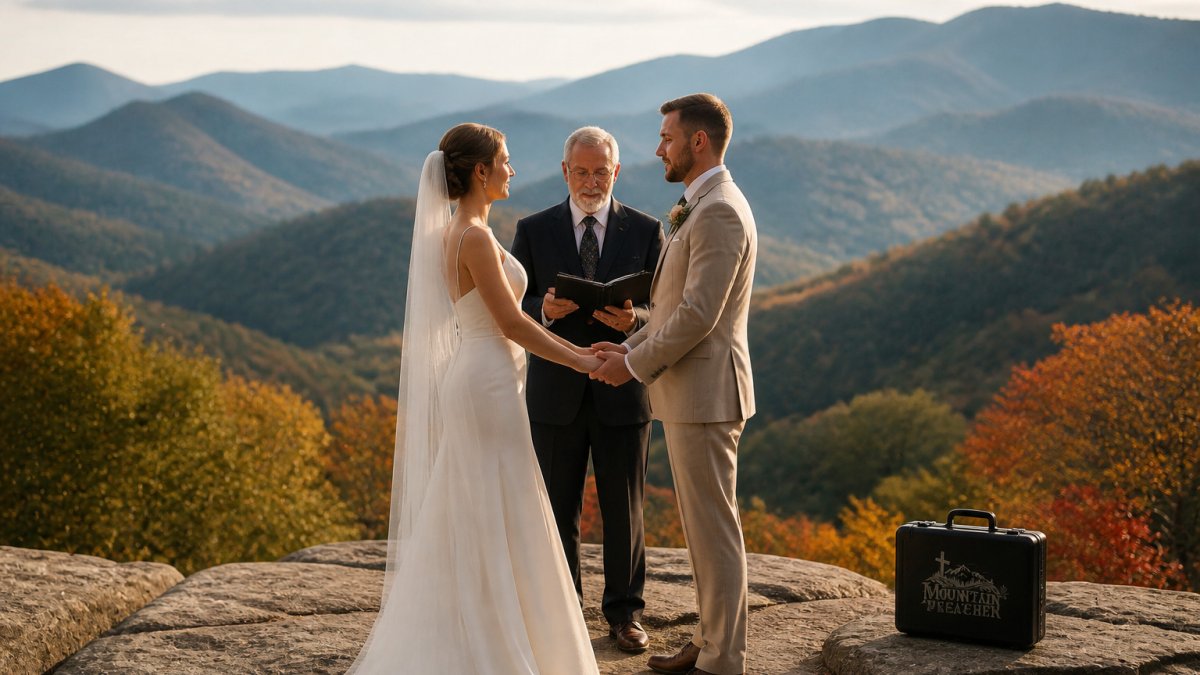
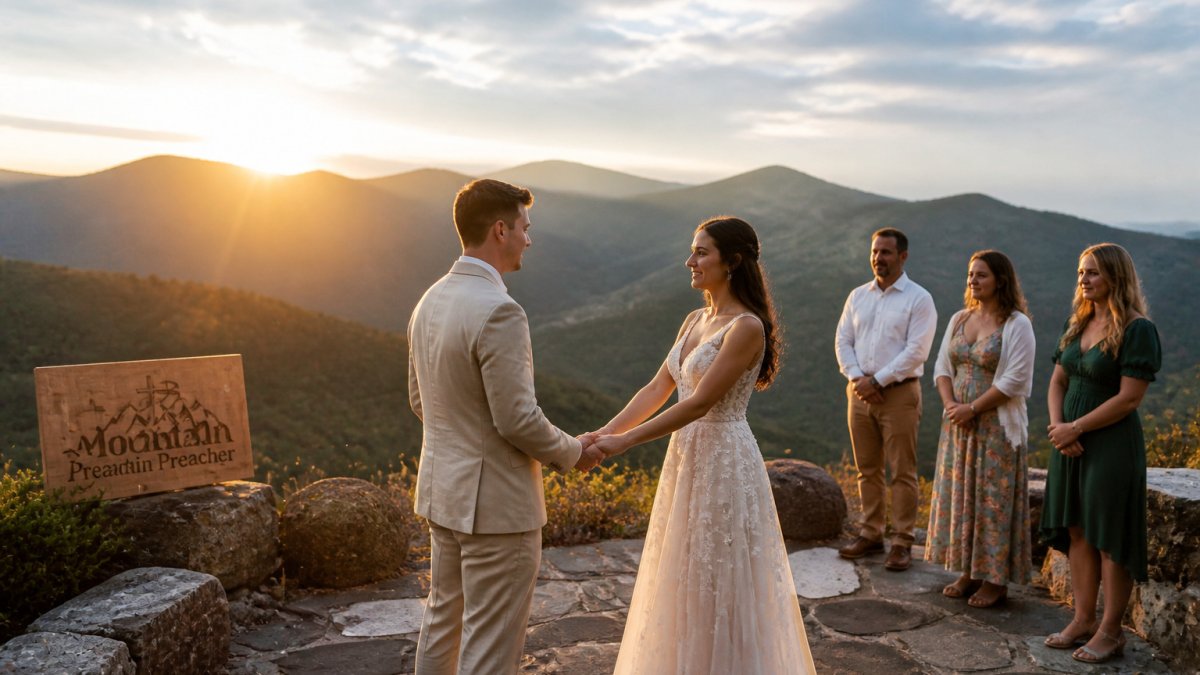
The Great Smoky Mountains draw couples who want a mountain wedding ceremony that feels personal rather than ceremonial. A non-religious mountain ceremony gives you room to write the words, pick the setting, and decide who stands up front. Done well, it feels intimate and unhurried. Done poorly, it feels like a rushed afterthought in a parking lot. The difference usually comes down to planning the venue and the paperwork before you plan the poetry.
Cabins, Overlooks and Waterfalls Compared
Each setting asks something different from you. A cabin offers shelter, and an indoor option if the weather turns. An overlook offers the view that most couples are actually paying for, but it also means wind, exposed sun, and guests who need to walk uphill. Waterfalls are the most photogenic and the most logistically demanding, since the approach trail, the noise of the water, and the rules around protected areas all shape what you can do. For a complete walkthrough, see this planning guide for eloping at a waterfall.
Ask three questions before you commit to a mountain wedding ceremony: How far will your guests walk, and at what elevation? What is your backup if rain or fog rolls in? Does the spot require a permit? A cabin with a covered porch often beats an open meadow for a ceremony with older guests.
Permits and Rules for Public Land
Many of the most dramatic locations sit on federal or state land, and that changes the planning. Ceremonies on National Park Service land can be subject to permit requirements that vary by location (Special Event Permits (U.S. National Park Service)). Read the official park website for current requirements and give yourself lead time. Do not assume that a private cabin rental or a quiet overlook is exempt from local ordinances.
Plan for the rules to be stricter than your instinct suggests. Carry out everything you bring in, keep groups small, and stay on designated trails. If the rules feel confusing, that is a reasonable signal to choose a cabin or private overlook and save the waterfall for a separate, informal visit.
Types of Non-Religious Ceremonies to Consider
A secular ceremony is not one format. It is a family of choices, and the most useful way to think about them is by how much structure you want. Readers weighing a civil ceremony against a religious one can compare the key differences between civil and religious ceremonies in detail. Here are the common approaches:
- Humanist ceremony: Built around shared values, gratitude, and the story of the couple, with no reference to a deity.
- Civil-style ceremony: Short, legally focused, and built around the required declarations. Often the simplest and least expensive route.
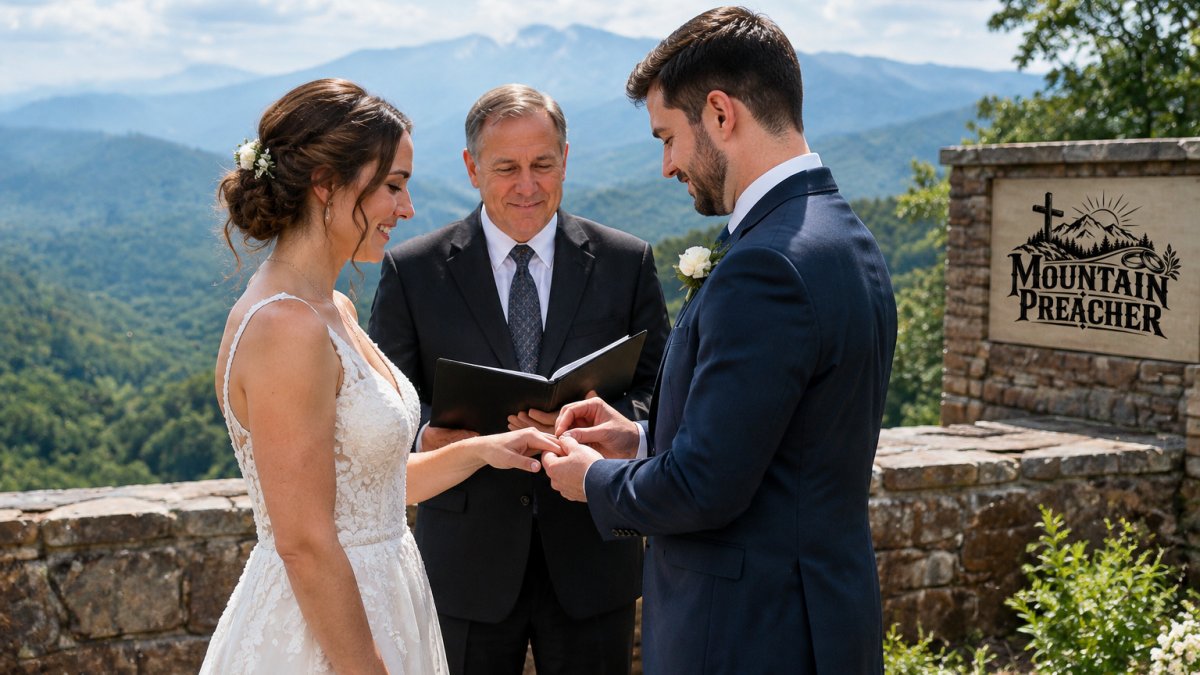
- Personal vows ceremony: Centered on the couple's own written vows, with a brief welcome and closing. This is the most popular for elopements.
- Nature-themed ceremony: Uses the landscape as the central metaphor, such as seasons, water, or the ridgeline.
- Unity ceremony: Incorporates a symbolic act, like blending sand or lighting a shared candle, that works well outdoors.
- Vow renewal ceremony: Revisits existing promises with new readings or reflections, often for an anniversary.
Each type can be scaled to fit a two-person elopement or a micro-wedding of twenty guests. Choose the type first, then build the script around it.
How to Structure a Nonreligious Wedding Ceremony Script
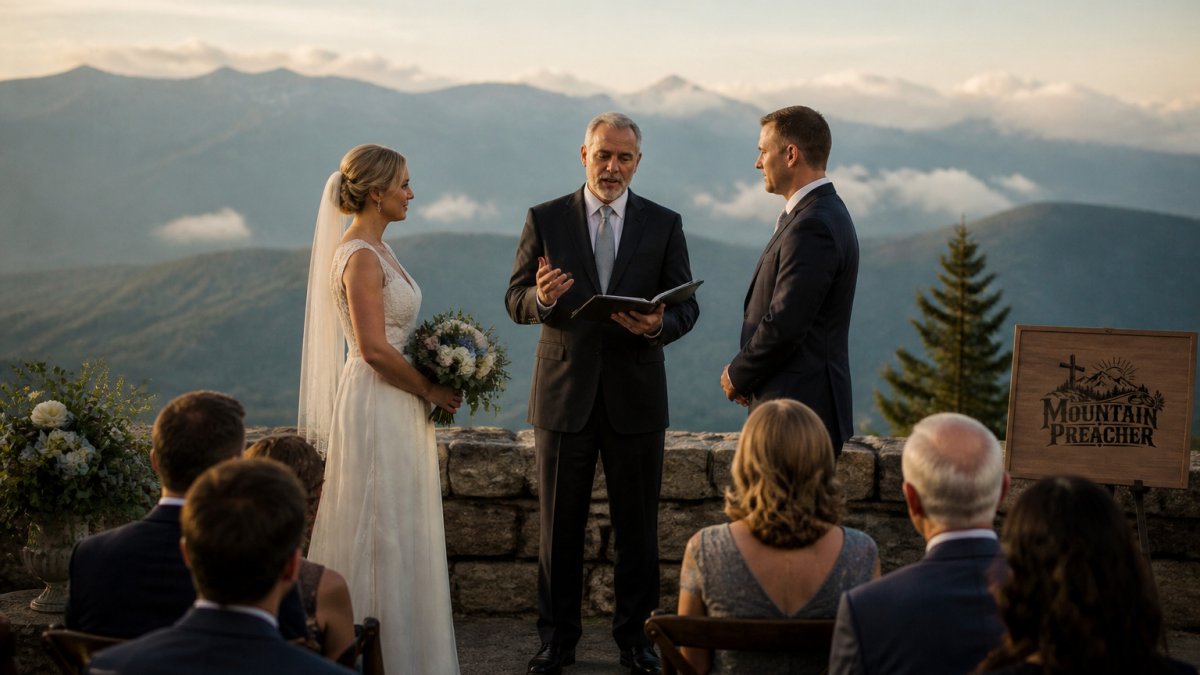
A good script has a clear arc: a welcome, a statement of purpose, the personal part, and a close. Secular ceremonies are often kept short, which suits outdoor settings where attention can drift. Write the script in your own words, read it aloud, and time it at the actual pace you expect to speak.
Opening, Welcome and Purpose
Open by greeting everyone and naming why you have gathered. A common mistake is to spend too long on scenery. Keep the opening to two or three sentences, then move to the couple. Name the place briefly, mention the people present, and state that you are here to make a commitment. This sets the tone without needing any religious language.
Vows, Readings and Closing
Place the vows near the center, after a short reading or reflection. Readings can be a poem, a passage from a book you both love, or a few lines you wrote yourselves. Close with the legal declaration if your jurisdiction requires it, then a brief pronouncement and an invitation to celebrate. Keep the closing short so the moment still feels like the couple's.
Nonreligious Wedding Vows Examples You Can Adapt
Personal vows work best when they are specific. Vague promises sound generic outdoors, while concrete details carry weight. Here is a structure you can adapt:
"I choose you as my partner in every season. I promise to listen when things are hard, to laugh with you when they are easy, and to keep finding new places to stand beside you. Today I stand here, on this ridge, with the mountains as witnesses."
Replace the bracketed details with your own history: where you met, a shared habit, or a promise tied to the place. Keep each vow under a minute and agree on length with your partner so neither of you is surprised.
Outdoor Wedding Unity Ceremony Ideas for the Mountains
A unity ceremony gives guests something to watch and gives the couple a physical symbol. Outdoor-friendly options include blending two colors of river stone into a single jar, planting a seedling together, or tying a ribbon around a shared branch. Choose an act that survives wind and does not leave litter behind. Practice the motion beforehand, since handling small objects on a windy ridge is harder than it looks.
A Short Wedding Ceremony Script for Elopements and Micro-Weddings
For an elopement with two to four people, a compact script works well:
"Welcome. We are gathered here on this mountain to celebrate [Name] and [Name]. Their love has brought them to this place today. [Name], please share your vows. [Name], please share yours. Your witnesses have heard your promises. By the authority given to me, I now pronounce you married. You may kiss."
Adjust the wording to match the legal requirements of your marriage license, and confirm the exact declaration with your officiant before the day.
Planning Logistics, Timing and Weather Backup Plans
Timing matters as much as the words. Sunrise and sunset ceremonies offer soft light and fewer visitors, but they demand early or late hiking and reliable headlamps. Midday ceremonies are simpler to reach but bring harsh light and crowds at popular spots. Build the schedule backward from your ceremony time, allowing extra time for the trail, photos, and unexpected delays.
Weather is the variable most couples underestimate. Mountain conditions can shift within an hour. Always have a backup location, ideally a covered porch or cabin interior, and agree on the decision point in advance, such as one hour before the ceremony. Pack layers, water, a small first-aid kit, and a plan for guests who need rest.
Booking Your Mountain Ceremony With Mountain Preacher
Mountain Preacher is led by Pastor Jody Secaur, who has more than 40 years of ministry experience, and offers both Christian and civil ceremony options for destination weddings and elopements across the Great Smoky Mountains. Pricing depends on the date, location, and services requested, so contact Mountain Preacher directly or check the website for current rates and availability.
Last Updated: November 2, 2026
Frequently Asked Questions
How do you plan a nonreligious wedding ceremony in the mountains?
Start by choosing the venue and checking whether it needs a permit, since public sites often have specific rules. Next, decide on the ceremony length, the guest count and the order of events. Then write a script that reflects your relationship rather than a religious tradition. Confirm the weather plan and a backup location before the day. An experienced officiant can help you map each step so the ceremony feels personal and unhurried.
What can you include in a wedding ceremony instead of a religious reading?
Many couples use a personal story, a poem, a passage from a favorite book, a song lyric or a short reflection on what they value in each other. Some ask a family member or friend to share a memory. Others include a unity ritual, such as lighting a candle, pouring sand or tying a cord. The key is choosing material that speaks to your shared life and values, and keeping it short enough that guests stay engaged.
What are some meaningful unity ceremony ideas for an outdoor wedding?
Popular options include a hand-fasting with a length of cord, a stone-stacking ritual at the overlook, a tree or wildflower planting, or a jar of sand layered by each partner. Mountain settings also lend themselves to a shared walk to a viewpoint or a symbolic river crossing near a waterfall. Choose one ritual that fits your venue and your guest count, and explain its meaning briefly so everyone understands it.
How do you write personal wedding vows for a nonreligious ceremony?
Begin with three to five specific memories, such as a first trip together or a moment you knew you were a team. Describe how your partner makes everyday life better, then state one or two promises you can keep. Keep each vow under two minutes spoken aloud. Read the draft out loud, cut anything that sounds generic, and share it with your partner beforehand if you want to avoid surprises.
How long should a nonreligious wedding ceremony be?
Intimate mountain ceremonies are often kept fairly brief. Shorter ceremonies work well for elopements where guests are few and the location is the main attraction. Longer ones suit micro-weddings with family readings or multiple rituals. Factor in travel time to the overlook and any permit window, because the official portion should fit comfortably inside your scheduled time slot.
What should an officiant say in a nonreligious wedding ceremony?
A typical script includes a welcome, a short statement on the purpose of gathering, an explanation of the couple's commitment, the exchange of vows, a ring or unity moment, and the pronouncement of marriage. Officiants can tailor the language to be fully secular or to include faith references if the couple wants them. Ask your officiant to review the script with you in advance so the tone matches what you envision.
Do you need a permit to get married at a waterfall in the Smoky Mountains?
Rules depend on the exact location. Ceremonies on public land are subject to the rules of the managing agency, which can vary by site. Private cabins and lodges usually have their own policies. Confirm the rules for your specific site before booking, and ask your officiant to help you understand what applies to your plans.
What should you plan if the weather turns bad on the day?
Identify a covered or indoor backup, such as a cabin porch, a lodge room or a sheltered overlook, and confirm it is available before the wedding. Check the forecast several days ahead and set a decision time, for example 48 hours out, when you will commit to the backup. Keep the ceremony script flexible enough to move indoors without losing its core moments.